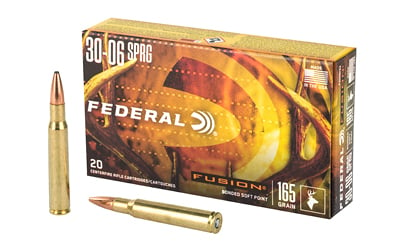
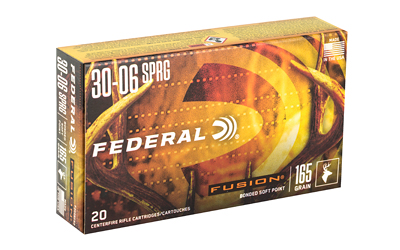
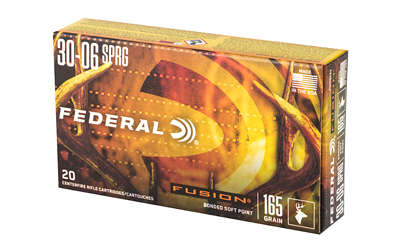
FUSION 3006 165GR 20/200
Original price was: $54.99.$44.15Current price is: $44.15.
FUSION 3006 165GR 20/200
Out of stock
This product is currently sold out.
Don't worry! Enter your email and we'll notify you when it's available again.
Description
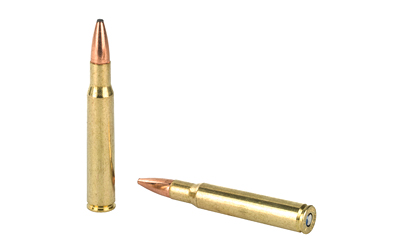
Federal’s Fusion line was built around a single purpose: killing deer cleanly and reliably. The core technology is an electrochemical bonding process that fuses the copper jacket directly to the lead core at a molecular level rather than mechanically crimping or swaging the two together. That bond is what keeps the bullet intact through the violence of expansion, allowing it to shed petals in a controlled way while holding most of its original weight deep into the target. More retained mass at impact depth means more energy delivered to tissue rather than shed on the surface or lost in fragmentation.
The nose is skived before leaving the factory — shallow cuts are machined into the tip to act as pre-programmed expansion points. This removes the uncertainty of whether a particular impact angle or velocity will initiate expansion cleanly, because the bullet is already designed to open at those locations. The pressure-formed core ensures the lead is uniformly dense throughout, which contributes to both consistency in flight and predictable terminal behavior. Federal lists the ballistic coefficient at .454, which is high enough to resist wind deflection meaningfully at distances where follow-up shots on game become difficult.
The 165-grain weight in .30-06 Springfield is a practical middle ground for this cartridge: it carries more sectional density than lighter loads in the same caliber, improving penetration on larger-bodied deer and similar game, while not pushing recoil to the level that heavier bullets do at the velocities this case generates. Muzzle velocity is 2,790 feet per second, and Federal specifies a minimum terminal velocity of 1,900 feet per second for reliable expansion — a useful benchmark when calculating effective range for any given hunting scenario. Brass case, boxer primer, and non-corrosive powder make fired brass straightforward to reload if that matters to the shooter.
Additional information
| UPC | 029465097981 |
|---|---|
| Manufacturer | |
| Manufacturer Part Number | F3006FS2 |
| Caliber/Gauge | .30-06 Springfield |
| Case Material | Brass |
| Grains | 165Gr |
| Length | 6.1500 |
| Model | Fusion |
| Product Type | Boat Tail |
| Shipping Weight | 1.3 |
| Units per Box | 20 |
| Cost per Round | 2.21 |
Related products
-
Sale!

FED PWRSHK 270WIN 130GR SP 20/200
Original price was: $44.99.$35.70Current price is: $35.70. Add to cart -
Sale!
FED PRM 308WIN 150GR TRPHY CP 20/200
Original price was: $66.99.$53.42Current price is: $53.42. Read more -
Sale!
FED PWRSHK 7MMMAU 140GR SP 20/200
Original price was: $83.99.$66.97Current price is: $66.97. Add to cart -
Sale!
FED AE 6.8SPC 115 FMJ 20/200
Original price was: $37.99.$30.10Current price is: $30.10. Add to cart