
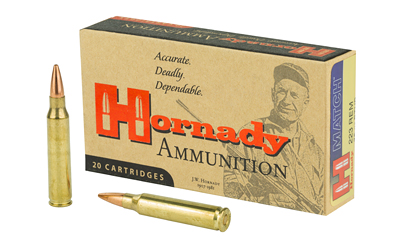
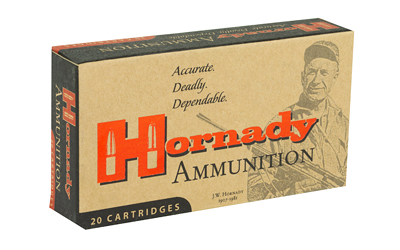
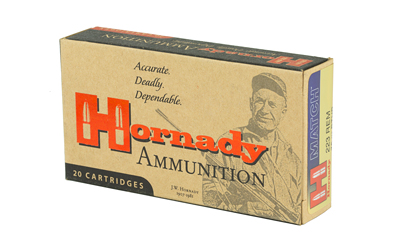
HRNDY 223REM 75GR BTHP MTCH 20/200
Original price was: $40.95.$31.12Current price is: $31.12.
HRNDY 223REM 75GR BTHP MTCH 20/200
320 in stock
Description
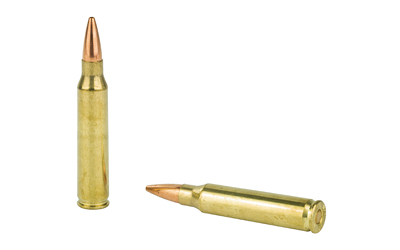
Hornady Match ammunition in .223 Rem is built for precision rifle shooting where consistency between rounds matters as much as raw accuracy. The load centers on a 75-grain boat tail hollow point, a projectile weight on the heavier end of the .223 spectrum. That extra mass, relative to lighter 55- or 62-grain options, translates to a higher sectional density and a ballistic coefficient of .395, meaning the bullet sheds velocity more slowly downrange and is less sensitive to wind deflection at distance — an important consideration for any shooting beyond 200 yards.
The boat tail geometry itself serves a specific purpose at the base of the bullet: it smooths airflow as the projectile exits the muzzle and transitions from propellant gas pressure to free flight, which reduces the aerodynamic disturbance that can introduce early yaw. The hollow point in this context is not a terminal-performance feature but a manufacturing approach — seating the ogive from the inside of the jacket produces a more uniform, concentric meplat than a typical flat-based or open-tip match bullet formed from the outside in. The result is tighter shot-to-shot ballistic consistency.
Each round is loaded in brass cases, which offer reliable neck tension and are dimensionally consistent across a production run. At 2,790 feet per second muzzle velocity, this load produces enough downrange energy to remain stable through the transonic transition at typical target-shooting distances. This is a 20-round box, suited for a deliberate range session or competition stage rather than volume practice. Shooters running barrels with faster twist rates — 1:8 or 1:7 — will stabilize this 75-grain bullet fully, which is necessary to realize the consistency Hornady builds into the projectile.
Additional information
| UPC | 090255380262 |
|---|---|
| Manufacturer | |
| Manufacturer Part Number | 8026 |
| Bullet Weight (Grains) | 75 |
| Caliber/Gauge | .223 REM/5.56 NATO |
| Case Material | Brass |
| Grains | 75Gr |
| Length | 4.5500 |
| Model | Match |
| Product Type | Boat Tail Hollow Point |
| Shipping Weight | 0.6375 |
| Units per Box | 20 |
| Cost per Round | 1.56 |
Related products
-
Sale!
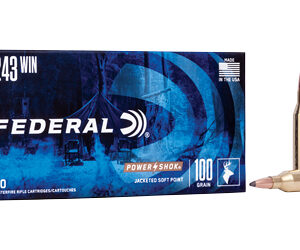
FED PWRSHK 243WIN 100GR SP 20/200
Original price was: $44.99.$36.04Current price is: $36.04. Add to cart -
Sale!
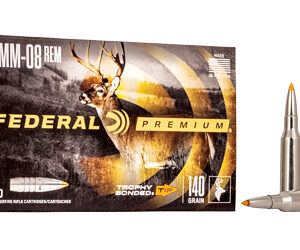
FED PRM 7MM08 140GR TRPHY TIP 20/200
Original price was: $68.99.$55.21Current price is: $55.21. Read more -
Sale!
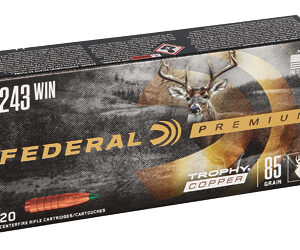
FED PRM 243WIN 85GR TRPHY COPPER 20
Original price was: $63.99.$50.59Current price is: $50.59. Read more -
Sale!
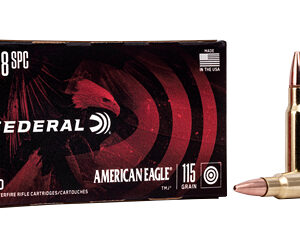
FED AE 6.8SPC 115 FMJ 20/200
Original price was: $37.99.$30.10Current price is: $30.10. Add to cart