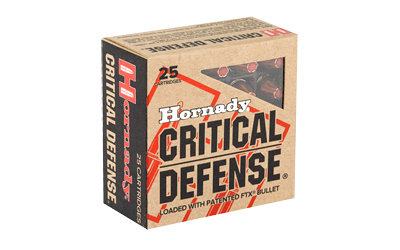
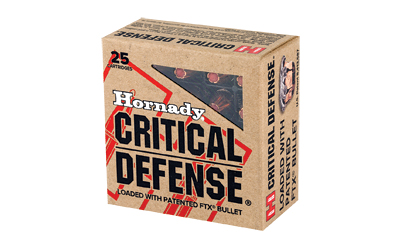
HRNDY CD 9MM 115GR 25/250
Original price was: $40.95.$31.69Current price is: $31.69.
HRNDY CD 9MM 115GR 25/250
26951 in stock
Description
Hornady Critical Defense in 9mm is built around a single problem: hollow point bullets that fail to expand when they pass through clothing before reaching a target. Fabric fibers pack into the cavity and prevent the nose from opening, turning a defensive hollow point into something that behaves more like ball ammunition. Hornady’s FTX bullet solves this with a polymer tip that fills the hollow point cavity, keeping it clear of obstruction so expansion begins reliably on contact regardless of what the bullet passed through on the way in. That same tip also improves the ballistic coefficient over a conventional open-cavity hollow point, though at defensive pistol distances the practical difference is modest.
The propellant charge is selected to produce a low muzzle flash signature, which matters when a defensive shooting happens in reduced light. Bright muzzle flash causes temporary vision disruption at the worst possible moment, and minimizing it is a deliberate design priority rather than a byproduct of the loading. Brass cases use Boxer priming, meaning the cases are reloadable if you want to recover them, though the round is clearly intended for carry use rather than range volume.
At 115 grains, this loading sits at the lighter end of the 9mm weight range, which tends to produce higher velocity with a flatter trajectory at short distances. The trade-off is that heavier bullets generally retain energy better as distance increases and may expand more consistently through intermediate barriers, so the choice between this and a heavier defensive load depends on your specific carry context. For most concealed carry applications, 115-grain 9mm from a quality hollow point loading is a proven and practical choice.
Additional information
| UPC | 090255902501 |
|---|---|
| Manufacturer | |
| Manufacturer Part Number | 90250 |
| Bullet Weight (Grains) | 115 |
| Caliber/Gauge | 9mm |
| Case Material | Brass |
| Grains | 115Gr |
| Length | 2.6000 |
| Model | Critical Defense |
| Product Type | FlexTip |
| Shipping Weight | 0.7 |
| Units per Box | 25 |
| Cost per Round | 1.27 |
Related products
-
Sale!

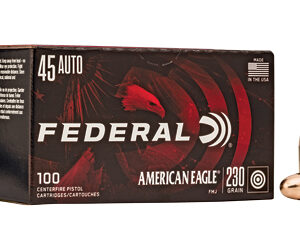
FED AM EAGLE 45ACP 230GR FMJ 100/500
Original price was: $77.99.$61.68Current price is: $61.68. Add to cart -
Sale!
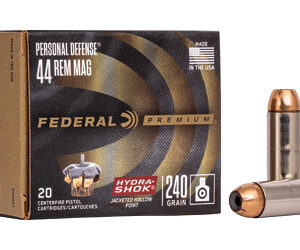
FED HYDRA-SHOK 44MAG 240GR 20/500
Original price was: $61.99.$49.17Current price is: $49.17. Read more -
Sale!
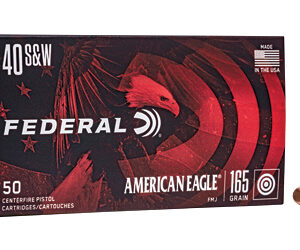
FED AM EAGLE 40S&W 165GR FMJ 50/1000
Original price was: $34.99.$27.92Current price is: $27.92. Read more -
Sale!
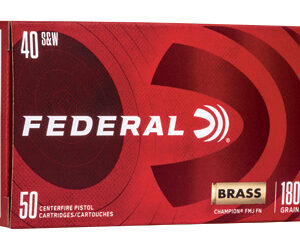
FED CHAMP 40S&W 180GR FMJ BRSS 50/1
Original price was: $35.99.$22.10Current price is: $22.10. Add to cart