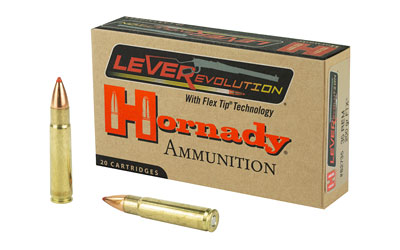

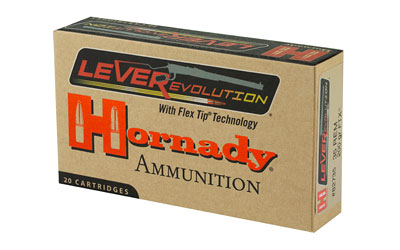
HRNDY LVREVO 35REM 200GR 20/200
Original price was: $61.95.$47.43Current price is: $47.43.
HRNDY LVREVO 35REM 200GR 20/200
788 in stock
Description
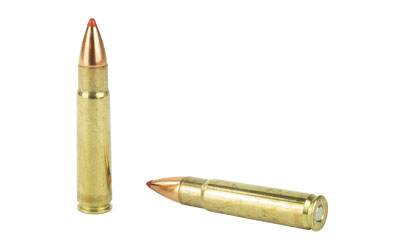
Hornady’s LeverEvolution line was built around a specific problem: tubular magazines require flat-nosed or round-nosed bullets to prevent the point of one cartridge from resting against the primer of the one ahead of it under recoil. That constraint historically forced lever-action hunters to accept the modest ballistic coefficients that come with blunt projectiles. The FTX bullet solves this with a flexible polymer tip that compresses harmlessly inside a tubular magazine but functions exactly like a pointed tip in flight, raising the ballistic coefficient and flattening the trajectory compared to what a conventional flat-point load in the same caliber can achieve.
For the .35 Remington specifically, this matters because the cartridge has always been a capable short-range deer and hog round carried in lever-action rifles, but it has traditionally shed energy quickly past 100 yards. The 200-grain FTX load leaves the muzzle at 2,225 fps and carries 2,198 ft-lbs of muzzle energy, giving it considerably more reach than older flat-point loads while remaining appropriate for the platform. Hornady publishes a G1 ballistic coefficient of .300 for this bullet, which is meaningful headroom over a conventional flat-point in this bore diameter.
The FTX bullet is also a controlled-expansion design: the polymer tip drives into the lead core on impact to initiate expansion at velocities where older soft-points might fail to open reliably. That characteristic makes this load useful across the range of distances a .35 Remington lever gun is realistically employed. Brass is boxer-primed and reloadable. Each box contains 20 rounds.
Additional information
| UPC | 090255827354 |
|---|---|
| Manufacturer | |
| Manufacturer Part Number | 82735 |
| Bullet Weight (Grains) | 200 |
| Caliber/Gauge | .35 Remington |
| Case Material | Brass |
| Grains | 200Gr |
| Length | 5.4500 |
| Model | LeverEvolution |
| Product Type | FlexTip |
| Shipping Weight | 1.2 |
| Units per Box | 20 |
| Cost per Round | 2.37 |
Related products
-
Sale!

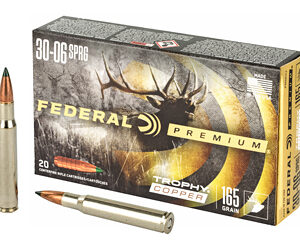
FED PRM 3006 165GR TRPHY CPR 20/200
Original price was: $66.99.$53.42Current price is: $53.42. Add to cart -
Sale!
FED PWRSHK 223REM 55GR SP 20/200
Original price was: $30.99.$24.85Current price is: $24.85. Add to cart -
Sale!
FED PWRSHK 270WIN 150GR SP RN 20/200
Original price was: $44.99.$35.70Current price is: $35.70. Add to cart -
Sale!
FED PWRSHK 308WN 180GR SP 20/200
Original price was: $44.99.$36.04Current price is: $36.04. Add to cart